


What is pad printing?
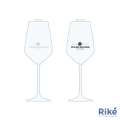
Pad printing is a clever way of placing a logo or text on a product. The principle is simple: a flexible silicone pad (the pad) absorbs the ink from a printing plate and then transfers it to the product. Because the pad bends with the shape, it can be printed effortlessly on round or curved surfaces.
Why choose pad printing?
This method is widely used for personalising glassware and tableware. A beer glass with a logo or a coffee cup with your own design gets a sleek and professional look thanks to pad printing.
Why is pad printing so versatile?
Pad printing works on many different materials. Whether glass, plastic, ceramic or wood: the print will be sharp and neat.
Why is pad printing so detailed?
The pad extracts the ink from a finely etched plate. As a result, even small letters or thin lines can be accurately transferred. This makes pad printing particularly suitable for logos with lots of detail.
What are the disadvantages of pad printing?
For very large areas, the technique is less convenient and a separate print run is required for each colour. Important to know: the printing is usually not dishwasher-safe. Washing by hand is therefore the best choice. Or plastic glasses, however, pad printing is dishwasher-safe.
Pad printing is versatile, precise and reliable. An excellent way to bring your brand or message to life on a product.
Curious about the possibilities? Contact Riké Group and let us advise you.
Index
Popular blogs
.jpeg)
.jpg)