


What is a grand café?
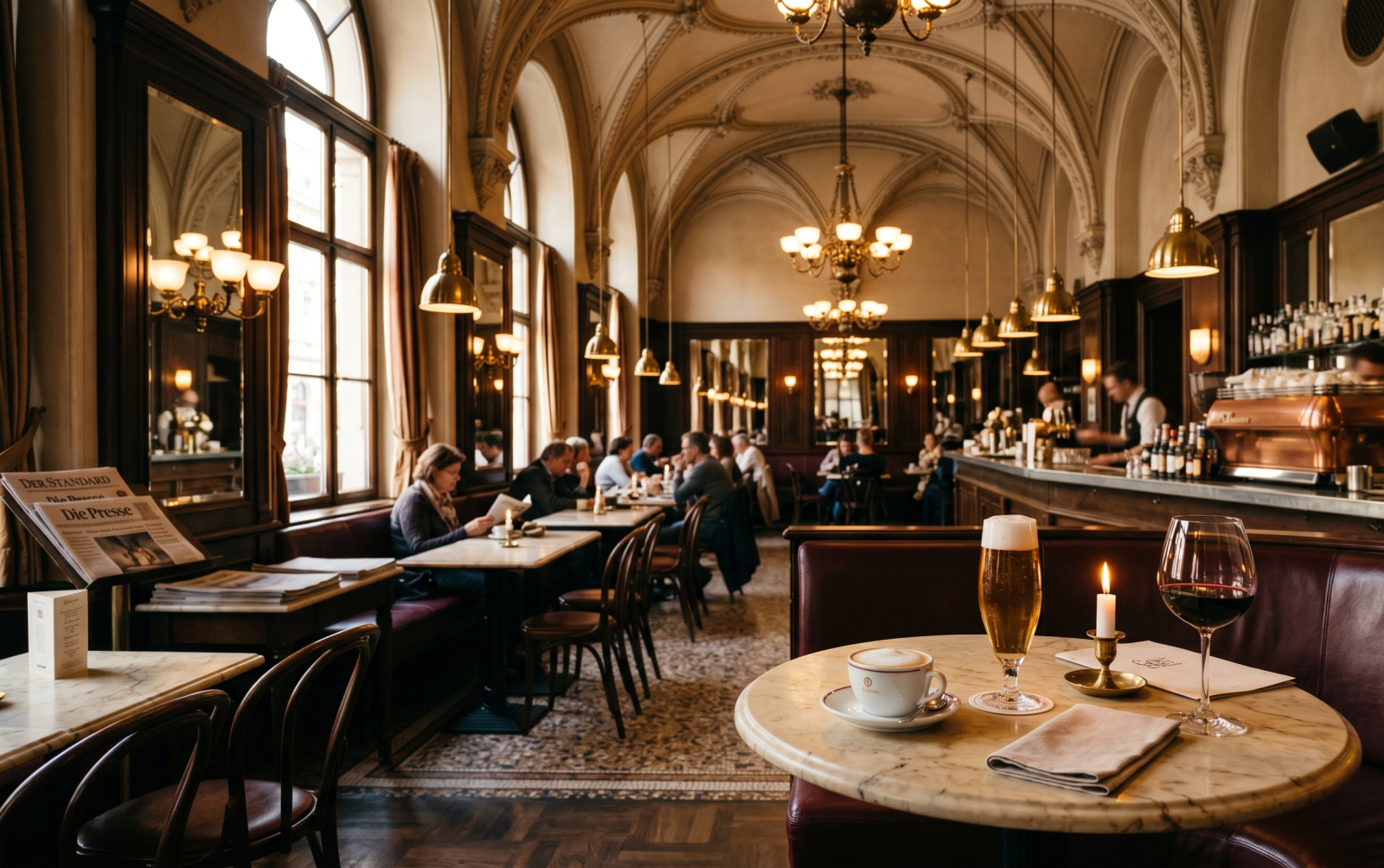
You walk into a spacious establishment. High ceilings, large mirrors, a reading table piled high with newspapers. An espresso machine hisses at the bar. On the little table next to it, a glass of wine sits beside a cappuccino. This isn’t just any old café. But what is it, then? Chances are you’re in a grand café. Time to explain exactly what that is.
What is a grand café?
A grand café is a spacious, stylish establishment that combines the cosy atmosphere of a café with the cuisine of a restaurant, from morning until late in the evening. The meaning is right there in the name. ‘Grand’ is French for ‘large’, and ‘café’ means ‘coffee house’. Put together, it means a large coffee house. Although it’s certainly no longer just about coffee.
The concept originated in 19th-century France. These were chic venues where people gathered to eat, drink and discuss the latest news. Around 1900, the trend spread to the Netherlands. Old coffee houses were converted into spacious establishments, often in Art Nouveau and later Art Deco styles. A fine example is Café Américain in Amsterdam, which opened in 1902. Fun fact: many grand cafés are still housed in listed buildings, complete with marble, tall windows and sometimes the city’s oldest reading table.
The difference between a café and a grand café
The difference between a café and a grand café lies mainly in the size, the menu and the opening hours. A regular café is cosy and informal. The focus is on drinks and a pleasant evening out. A grand café is larger and serves all day: breakfast, lunch, drinks and dinner. Below is a summary of the main differences.
|
Characteristic |
Ordinary café |
Grand café |
|
Size |
Compact and cosy |
Spacious, with high ceilings |
|
Menu |
Drinks and snacks |
Full kitchen service, all day |
|
Opening hours |
From lunchtime until late at night |
Early morning until just before midnight |
|
Atmosphere |
Casual, neighbourhood-oriented |
Lively, stylish, urban |
The glassware makes all the difference
A grand café also showcases its grandeur at the table, in the glass in front of you. This is something most people overlook. A single menu featuring coffee, speciality beers, wine and cocktails simply requires more and more specific glassware than a traditional pub that gets by with just two types of glass.
A proper cappuccino glass for the morning. A tulip-shaped beer glass that beautifully retains the head. A balloon glass that literally gives a gin and tonic some breathing space. These are subtle signs of quality. Ever since 2006, when printed hospitality glassware first appeared, we’ve seen this time and again. Establishments that want to make a difference choose their glassware carefully, often featuring their own logo. That detail sticks in the guest’s mind.
Frequently Asked Questions
What is the difference between a pub and a grand café?
A café is small and informal, with the emphasis on drinks and a night out. A grand café is more spacious and stylish, with a full kitchen and extended opening hours. You can visit from the morning onwards for breakfast, lunch, drinks and dinner.
Is it ‘de’ or ‘het’ grand café?
It is ‘het grand café’. In Dutch, ‘café’ is a noun that takes ‘het’, so you say ‘het café’ and therefore also ‘het grand café’. ‘De café’ is incorrect. This remains the case, even with the French ‘grand’ in front of it.
Where does the term ‘grand café’ come from?
The term comes from French and literally means ‘large coffee house’. The concept originated in 19th-century France and came to the Netherlands around 1900. There, coffee houses were converted into spacious, stylish meeting places in the major cities.
Want to create a grand café atmosphere at your table?
A grand café makes an impression with the right details, and the glassware is an essential part of that. At Riké Group, we print and engrave hospitality glassware, porcelain and tableware to suit your business, complete with your own logo. Curious to see what’s possible? Feel free to browse our range or get in touch. We’d be happy to help.
Index
Popular blogs
.jpg)